Identifying details
Title, maker, materials, dimensions and distinguishing features. What is unknown stays unknown.
For artists, galleries & collectors
The work that moves you.
The story you pass on.
The care that continues.
From the first studio story to the next collector: give an artwork a record that reflects its history.
Start an artwork recordFirst version · private registration through XO
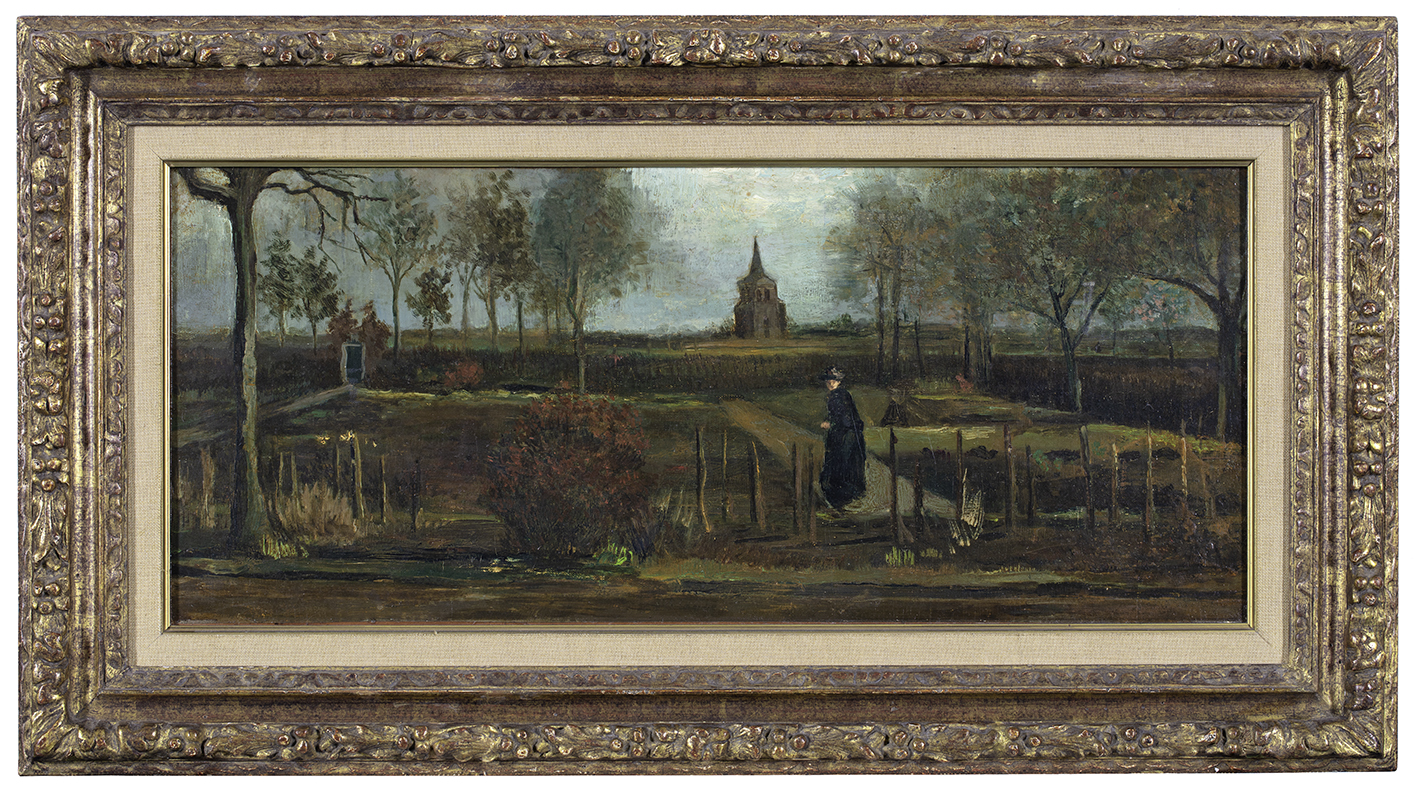
Archive image from before the theft and restoration.
Artwork history / a documented example
Van Gogh’s Lentetuin (Spring Garden) was stolen from Singer Laren in 2020 and recovered in 2023. Examination documented damage. The Groninger Museum reports that, following restoration, the work went back on display on 31 March 2026.
These events belong to the work’s history: with a date, a source and a clear distinction between its condition before and after treatment.
Read the museum’s restoration report ↗An independent case study based on public sources. This work has no XO-issued record or tracker; there is no partnership with the museum.
Vincent van Gogh, Lentetuin, de pastorietuin te Nuenen in het voorjaar (Spring Garden, the Parsonage Garden at Nuenen in Spring).
From Singer Laren, where the work was on loan from the Groninger Museum.
Its return is followed by an examination of its condition.
Treatment and findings form a new documented chapter.
Available now / first private registration
Record the artwork’s details and two to six original photographs. Let the maker, owner and keeper (custodian) each confirm their own role. A gallery can prepare the record or care for the work without being its maker or owner.
Open artwork registration ↗Title, maker, materials, dimensions and distinguishing features. What is unknown stays unknown.
An overall photograph and relevant details: the reverse, signature, markings or surface.
Participants review the same recorded version. Once all confirmations are complete, the report can be downloaded.
The professional lifecycle / extensions in development
More than a name beside an image. The supporting evidence, the condition of the work, and who cared for it and when.
Provenance history, edition or inventory number, signature, certificate and the expert assessing the attribution. Verifying a tag and assessing an artwork remain separate matters.
Photographs before and after transport, damage, examination and treatment. With a date, a report and the conservator’s name. An old image is not presented as evidence of the current condition.
Distinguish between the artist, owner and temporary keeper. Record receipt, changes in condition and the relevant agreements without making private information public.
The first registration supports artwork details, photographs and role statements. Extended provenance histories, restoration reports, loan management and connections to security equipment are still in development.
Story & meaning
The artist’s original story deserves a place of its own. Exhibitions, encounters and new keepers can later add a chapter, with their name and date attached.
Professional documentation and personal stories complement each other. You choose what visitors may read and what stays within the record.
Pass on a story privately ↗The current handover uses a separate private flow. A connected public artist’s story, with contributions from subsequent keepers, is in development.
Security / active tracking as a separate pilot
Location monitoring can help detect an unwanted movement and recover an artwork. This requires an active tracker, with power and a connection to transmit positions.
A standard NFC tag opens the record when someone scans it at close range. It has no GPS of its own and does not transmit a live location. The same is true of a standard pet identification chip; a GPS collar is a different device.
Pilot in preparation · no live tracking connected
Only authorised owners, keepers and their security partners may see precise locations. Public artwork pages will not display current coordinates or transport routes.
Reception may be unavailable indoors or in a shielded space. A device can run out of power, come loose or be removed. Tracking supports security; it does not prevent theft on its own or guarantee recovery. A conservator must assess how equipment can be safely attached to a frame, plinth or transport crate.
A second case / Oisterwijk, 2024
The robbery at MPV Gallery on 1 November 2024 involved screenprints from Andy Warhol’s Reigning Queens. Two works were left in the street and damaged. According to reporting dated 23 October 2025, the two works taken were still missing.
For an edition, the specific copy, numbering, signature and dated condition photographs matter. They make a record useful for identification, damage assessment and possible recovery.
Read the dated news report ↗The consulted sources contain no confirmed recovery or restoration of the missing works. MPV Gallery is not an announced XO client or partner. This case illustrates a documentation need, not a proven result of our system.
A careful beginning
The current registration records which accounts make which statements, alongside the artwork details and photographs they review. It does not replace an investigation into authenticity, ownership or identity. An expert opinion needs its own provenance and supporting evidence. Even a cryptographically verified tag does not, by itself, prove that the artwork is authentic.
In the current artwork registration, these are private to the person preparing the record and the participating accounts. A public story is not automatically created from a private record. Participants can download original photographs, which may contain their original photo metadata.
Yes. Begin with one work whose details and photographs you are authorised to record. Invite the appropriate people to take the separate roles of maker, owner and keeper. Prepare each record carefully; once it is locked, corrections require a new record in this first version.
Start the first registration ↗No. The current XO version provides private registration. The secure physical link, live map, alerts and hardware are still being explored and connected. We will test these with a gallery, a conservator and a suitable security partner before offering them as a service.
Consulted on 22 September 2026. Historical events are based on the sources below; the XO extensions described here do not constitute museum or gallery certification.